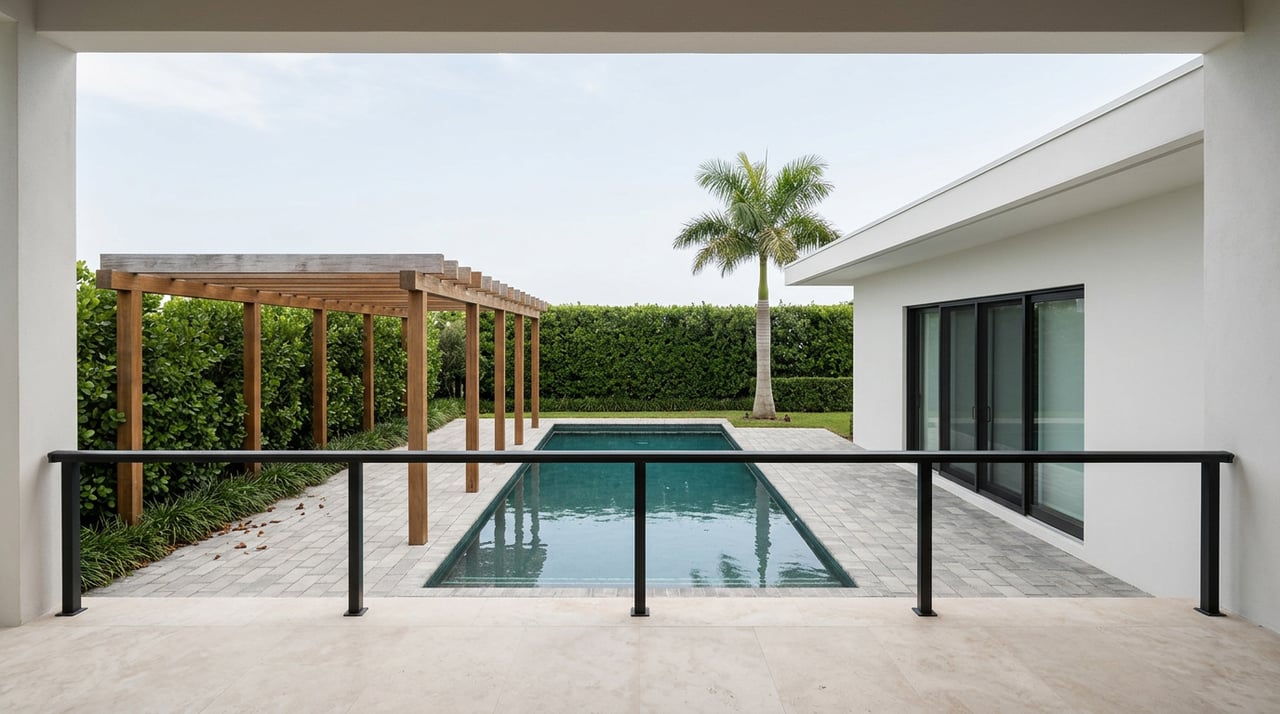
A homeowner scanning listing portals in August 2026 sees Ocean Ridge's median asking price sitting at $2.19 million, a jump of 75 percent from a year earlier. For a town of under 2,000 residents tucked between the Atlantic and the Intracoastal, that is a striking number. It is also close to useless for pricing an actual sale.
Here is why. Between June 9 and July 17, 2026, nine Ocean Ridge properties closed. Prices ranged from $262,000 for a one-bedroom condo on N Ocean Boulevard to $8,575,000 for a three-bedroom beachfront estate on that same street. Same six weeks. Same town. A spread of more than thirty times between the smallest and largest sale. In a market that thin, one beachfront closing does more to move the median than a full year of gradual appreciation ever could.
Six Weeks, One Median, Millions Apart
Look at what actually traded that summer. A canal home on Osprey Drive closed at $2,200,000. A house on Dolphin Road brought $2,062,570. A smaller property on Old Ocean Boulevard sold for $848,505. Another condo, this one on N Ocean Boulevard, changed hands for $487,000. Then, on July 17, the beachfront estate at 6201 N Ocean Boulevard closed at $8,575,000, nearly four times the next closest sale that month.
Inventory across town stayed thin the whole time, generally somewhere between 40 and the mid-60s in active listings depending on the week. With that few transactions feeding the count, the median isn't tracking a trend. It's tracking whichever handful of houses happened to close. A single beachfront sale can pull the town's reported number toward eight figures for a month, even though most Ocean Ridge sales that summer landed well under $2.2 million.
The Real Split Isn't Ocean Frontage vs Canal, It's Documented vs Undocumented
If the median can't explain a thirty-fold spread, something else is doing the real sorting. Part of it is obvious: oceanfront commands more than interior canal frontage. But two comparable waterfront homes, similar square footage, similar lot, similar water access, can still land in very different places once a buyer's team starts asking about the seawall.
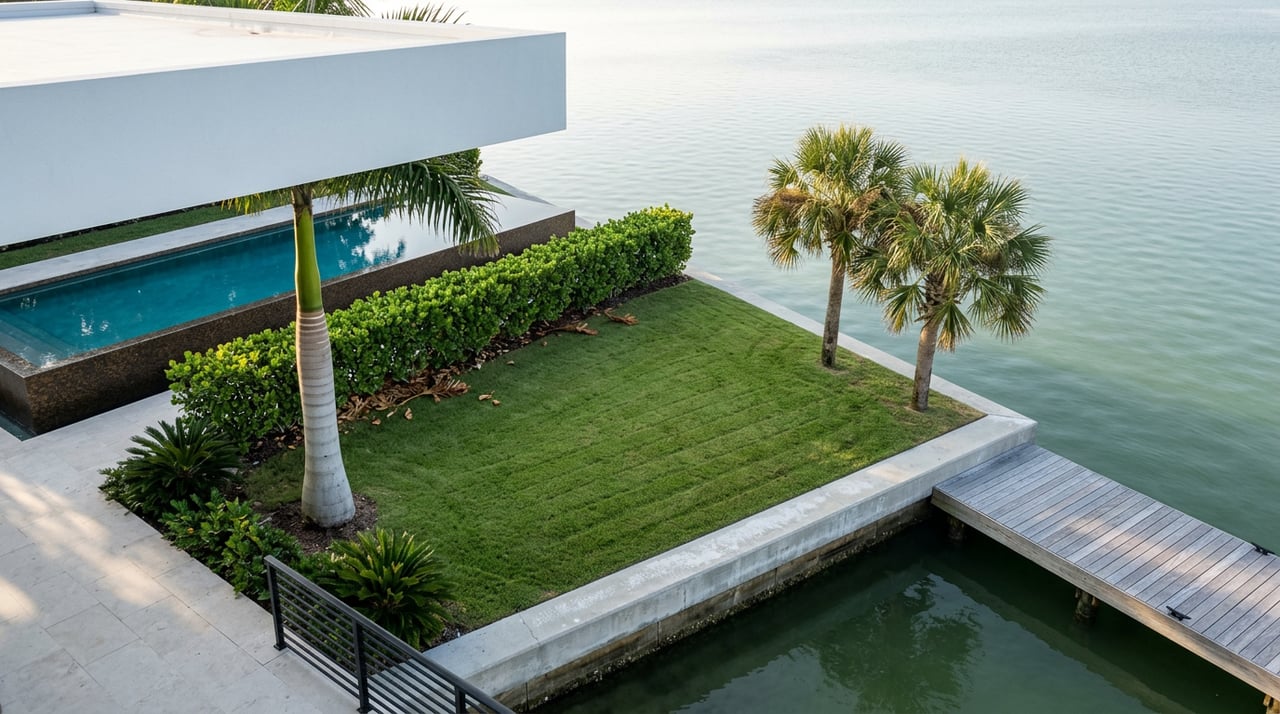
A marine contractor or structural engineer walking a seawall in Ocean Ridge looks for the same handful of warning signs: a wall face that leans or bulges, visible cracks, tiebacks that are exposed or corroded, settlement in the yard behind the wall, erosion at the toe, and seepage through or behind the structure. Any one of those turns a straightforward closing into a repair negotiation. What determines whether that negotiation goes smoothly or stalls the deal is whether the seller can produce a clean permit history for the wall, the dock, and any boatlift on the property. A seawall that was repaired without a permit, or a dock permit that was allowed to lapse, surfaces the moment a buyer's inspector calls the Town.
The Town Just Rewired Its Own Permit Process
That history matters more this year than last, because Ocean Ridge changed how it processes permits in the middle of 2026. As of July 1, the Town began requiring the Universal County-Wide/Municipal Building Permit Application Form for all applicable submissions. A week later, on July 8, an updated Building Department fee schedule took effect.
The bigger structural fact sits underneath both changes. Because the entire Town of Ocean Ridge lies within a flood hazard area under the Florida Building Code and HB 803, permits are still required for qualifying work valued at $7,500 or less. There is no minor-repair exemption here the way there might be in a town outside a flood zone. Seawall and seawall cap work, docks, boatlifts, and retaining walls all appear explicitly on the Town's list of permit types, and several of them require a mandatory pre-construction meeting before any work can begin. No permit, no posted documents at the jobsite, no work.
The Town's own code adds a second trap for older files. Under Section 67-52, construction must commence within six months of a permit's issuance or the permit expires. Once work starts, it has to finish within a year unless the building official grants an extension. A seawall repair permitted in 2023 that never broke ground, or a dock project that stalled partway through, may already be sitting in expired status without the owner realizing it. That gap doesn't show up on a tax roll. It shows up the moment a buyer's agent asks the Building Department for a status check.
Every Waterfront Renovation Here Lives Under One Federal Rule
Permits are the paperwork layer. Underneath that is a federal rule that decides how much renovation an older Ocean Ridge home can absorb before it has to meet new construction standards.
FEMA's updated flood maps for Palm Beach County took effect December 20, 2024, and raised the Base Flood Elevation on more than 16,000 county parcels by a foot or more. Because Ocean Ridge sits entirely within a flood hazard area, that county-wide shift isn't an abstract statistic here. It's the baseline every renovation in town now measures against, and Palm Beach County's own flood zone update page notes directly that the elevation increase can leave a structure non-conforming if its lowest floor sits below the new minimum required for a substantial improvement.
That phrase, substantial improvement, is the trigger buyers and sellers both need to understand. Under the federal rule, if the cost of a renovation, addition, or repair equals or exceeds half of a structure's pre-improvement market value, the entire building has to be brought up to current floodplain standards, the same standard applied to new construction. For an older canal-front home in Ocean Ridge that hasn't been substantially updated in a decade, the next big renovation, or the rebuild that follows storm damage, can cross that threshold without anyone planning for it. The Base Flood Elevation moved in December 2024. The 50 percent line didn't move, but what it takes to comply on the other side of it did.
Before You List, or Before You Write an Offer
A few steps separate a seller who controls this process from one who gets surprised by it partway through a contract.
- Pull the permit history for the exact address from the Town of Ocean Ridge Building Department directly, not just the county property appraiser's file.
- Confirm that any seawall, dock, or boatlift permit was formally closed out, and that none lapsed under the six-month commencement or one-year completion rule.
- Ask whether any past renovation approached half the home's pre-improvement value, and if so, what compliance work followed at the time.
- Request the property's current elevation certificate rather than relying on a flood zone letter alone.
- Have a marine contractor walk the seawall and dock before the home is priced, not after an offer arrives and a buyer's inspector finds the gaps first.
The median on a portal describes a town with only a few dozen closings across a whole summer. The permit file describes one house. In Ocean Ridge in late 2026, buyers, lenders, and appraisers are increasingly asking for the second number, not the first. A seller who assembles that file before listing sells on their own timeline. A seller who waits for someone else to find the gaps sells on someone else's.
FAQ
Does every renovation in Ocean Ridge trigger the 50 percent rule? No. It applies only when the total cost of a renovation, addition, or repair reaches half the structure's pre-improvement market value within a defined project period. A new kitchen or a re-roof rarely crosses that line on its own, but a full gut renovation or a rebuild after storm damage often does, particularly on an older home. Confirm the calculation with the Town's Building Department before scoping any major project.
Where do I find the actual permit history for an Ocean Ridge address? Start with the Town of Ocean Ridge's Building Department rather than the county property appraiser's site. The Town's own permit records are the system of record for whether a seawall, dock, or boatlift ever had an open, closed, or expired permit, and it's the same system a buyer's inspector or lender will check before closing.
If you're weighing a sale in Ocean Ridge and want a clear read on how your specific permit history, seawall condition, and flood compliance status affect your position in today's market, the Jennifer Kilpatrick Team can walk the file with you before it becomes a buyer's negotiating point. Request a Private Home Valuation to start that conversation.